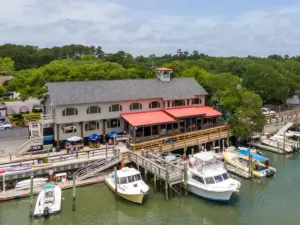
Most kayak packing lists are written for a lake. Murrells Inlet isn’t a lake. It’s a tidal salt marsh with oyster shell on the bottom, mud that eats footwear, no shade for miles, and cell coverage that quietly disappears about fifteen minutes into the back creeks.
So this list is specific to here, and it’s opinionated. Six things genuinely matter. Everything else is optional, and a few popular items are actively worse than useless.
Key takeaways
- Footwear is the decision people get wrong most often. Never flip-flops. Oyster shell cuts and pluff mud pulls shoes off feet.
- Polarized sunglasses change what you see — rays, fish, oyster bars under the surface. Non-polarized lenses show you glare.
- Cell service is unreliable in the back creeks. Download offline maps before you launch and don’t treat your phone as a navigation plan.
- There is essentially no shade on the marsh. A long-sleeve sun shirt beats reapplying sunscreen with wet, salty hands.
- Bring more water than feels reasonable. Dehydration on the water sneaks up on people because they don’t feel hot.
- Your rental includes the kayak, paddle, and life jacket. Everything else is on you.
What the rental gives you
Every operator here provides the boat, the paddle, and a Coast Guard–approved life jacket, and every one of them requires the life jacket be worn. Some include a dry bag; most don’t. Some have kid-sized paddles; ask.
What they don’t provide is anything on this list. See our rentals page for who runs what, and the cost guide for what a half day runs.
The six things that actually matter
1. Footwear you don’t care about
The single most common mistake. Not flip-flops — they come off in mud and offer nothing against oyster shell, which is sharp enough to open a foot and is everywhere in this estuary.
What works: old sneakers you’re willing to sacrifice, or proper closed-toe water shoes with a heel strap. What matters is that they stay on when your foot sinks and that they cover your toes.
The specific hazard is pluff mud — the soft, dark, sulfur-smelling marsh mud exposed at low tide. It isn’t dangerous, but it’s deep, it holds like a suction cup, and stepping out of a kayak into it in sandals is how people end up walking back to the car barefoot. Plan not to step out at all away from an established launch, and dress your feet for the times you have to anyway.
2. Polarized sunglasses
Not just sunglasses. Polarized.
Polarized lenses cut the reflected glare off the water surface and let you see into it. That’s the difference between paddling over a stingray and watching one glide under your hull, between guessing where the oyster bar is and seeing it. If you’re fishing, it’s the difference between casting blind and sight-fishing.
They also protect your eyes from a genuinely intense reflected UV load. Bring a retainer strap — sunglasses that go in the water here do not come back.
3. A dry bag, or at minimum a zip-top bag
Your phone will get wet. Not maybe. Spray, drips off the paddle shaft, a wet hand reaching for it — it accumulates.
A small dry bag is the right answer, and cheap. A gallon zip-top bag is the acceptable backup, and it works better than people expect. Either way: clip it to the boat. Something not attached to the kayak is something you’re going to lose.
Keys, phone, wallet, car fob. That’s the bag.
4. Sun protection, layered for a place with no shade
The marsh is open. There is no tree, no overhang, and nothing to duck under between March and October when the sun here is serious. Reflected light off the water roughly doubles your exposure.
What works:
- A long-sleeve sun shirt (UPF-rated). The most effective single item, because it doesn’t wash off and you don’t have to reapply it with wet salty hands.
- A wide-brim hat with a chin strap. The strap is the part people skip and then lose the hat.
- Reef-safe SPF 50+ on face, ears, neck, and the backs of your hands — the spots everyone misses.
The backs of your hands and the tops of your feet are where paddlers get burned worst. They face straight up for two hours.
5. More water than you think
You will not feel as hot as you are. Sitting still on the water, with a breeze, with your legs wet, your body under-reports the heat load — and then you get back to the car with a headache and a sudden understanding of why.
A liter per person per hour in summer is not excessive. Freeze one bottle the night before and it’ll still be cold at the turnaround. Bring it in something that won’t roll off the boat.
6. Offline maps, because your phone will let you down
Cell coverage in the marsh creeks and the blackwater river corridors is patchy to nonexistent. This is fine right up until it isn’t.
Before you launch, download an offline map of the area in whatever app you use. It costs nothing and takes thirty seconds. The creek junctions genuinely do look identical from a kayak seat — you’re two feet off the water with marsh grass above your head on both sides, and every turn looks like the last one.
Also: tell someone on shore where you’re launching and roughly when you’ll be back. That’s the actual safety net, not the phone.
Worth bringing if you have it
Snacks. Especially with kids. Hunger plus heat turns a good trip fast.
A change of clothes in the car. Not on the boat — in the car. Everyone gets wetter and muddier than planned, and the drive home is much better for it.
A cheap towel, same place.
Binoculars. Turns a paddle into a wildlife trip. See our guide to spotting dolphins for where to point them.
Bug spray, seasonally. The marsh has no-see-ums and mosquitoes at dawn and dusk in the warm months. On the water with a breeze you’re usually fine; at the launch, standing still, you’re not.
A whistle. Cheap, weighs nothing, carries much further than your voice, and it’s standard safety kit on the water.
A small bilge sponge. Sit-on-tops self-drain, but a sponge makes the seat area considerably more pleasant.
What to leave in the car
Anything you’d be upset to lose. Watches, jewelry, good sunglasses, a nice camera without a strap. The water is opaque and the mud is deep. Things that go in do not come out.
Cotton, if the weather is cool. It holds water and pulls heat out of you. In summer it just means you’re damp; in the shoulder seasons it’s a real comfort problem.
Flip-flops. Covered above, but worth repeating.
A big cooler. There’s nowhere to put it on a sit-on-top and it makes the boat handle badly. A small soft cooler bungeed to the rear tank well is the maximum.
Speakers. You’re in a wildlife estuary. Everyone within a quarter mile can hear it, and so can everything you were hoping to see.
More stuff generally. The most common overpacking error on a first trip is bringing a day-hike’s worth of gear for a ninety-minute paddle. If you can’t clip it to the boat, you’re going to spend the trip holding it.
What changes if you’re fishing
A fishing trip is a different packing list, mostly heavier and mostly about keeping gear from going overboard:
- Rod leash. Non-negotiable.
- Pliers on a retractor
- A small tackle selection, not the whole box
- Bait, and a way to keep it alive
- A measuring device
- Your SC saltwater fishing license, which is required and easy to get at dnr.sc.gov
Our inshore species guide covers what’s biting and on what.
What changes if you’re bringing kids
Add a kid-sized paddle, extra snacks, a change of clothes per child, and a properly fitted child or youth life jacket — South Carolina requires anyone under 12 to wear one on a vessel under 16 feet. Full detail in our guide to kayaking with kids in Murrells Inlet, including the three launches with the calmest water and the one that actually has restrooms.
The short version
If you read nothing else: closed-toe shoes, polarized sunglasses, phone in a bag clipped to the boat, sun shirt, water, offline map. That covers 95% of it, and everything else is comfort.
New to all of this? Start with the beginner’s guide to kayaking in Murrells Inlet, then pick a route from our five paddle routes.
Frequently asked questions
What should I wear kayaking in Murrells Inlet?
Quick-drying synthetics, a long-sleeve sun shirt, a hat with a chin strap, and closed-toe shoes you don’t mind ruining. Assume you’ll be damp from the waist down regardless of the weather.
Can I bring my phone?
Yes, in a dry bag or zip-top bag, clipped to the boat. Just don’t rely on it for navigation — service is unreliable in the back creeks.
Do I need my own life jacket?
No, every rental operator provides one and requires it be worn. If you own one that fits well, bring it — especially for kids, where fit matters most.
Is there anywhere to buy stuff at the launches?
Not really. Oyster Landing and Morse Park are ramps and parks, not outfitters. Buy water and sunscreen before you drive over, and note that Morse Park has no restroom at all.
What about a waterproof camera?
Great if you have one, but a phone in a clear dry bag takes better photos than most people expect and you already own it. Whatever you bring, put it on a leash.
Check the current tide chart and the marine forecast before every trip. See our launch site guide for parking and facilities at all thirteen public launches from Surfside Beach to Georgetown.