Yes — Murrells Inlet is generally safe to kayak, including for beginners, as long as you plan around the tide and treat it like the tidal saltwater estuary it is, not a calm lake. The real risks here aren’t dramatic; they’re the boring, preventable kind: getting caught by a fast-moving tide change, misjudging pluff mud, or paddling too close to the inlet mouth in a small boat.
Key takeaways
- The biggest real risk in Murrells Inlet is tidal current, not wildlife — check a tide chart before every trip.
- Alligators can be present in the brackish upper marsh creeks, less so in the higher-salinity water near the inlet mouth; they generally avoid people and attacks are rare, but don’t feed or approach one.
- Pluff mud (soft marsh mud exposed at low tide) is messy, not dangerous — the real hazard is getting stuck trying to walk through it, not the mud itself.
- Boat traffic, especially near the MarshWalk and inlet mouth, is the most common “close call” paddlers report — stay visible and hug the marsh edge in busier stretches.
- Afternoon thunderstorms are common on the SC coast in summer; check the forecast, not just the tide chart, before you launch.
Tides: the thing that actually matters most
Murrells Inlet is tidal, meaning the water rises and falls roughly twice a day, and current direction reverses with it. A route that’s an easy paddle on an incoming tide can turn into a slog against the current a few hours later. This is the single most useful thing to plan around — see our full Tides page for how to read a tide chart before you go, and try to time your trip so the tide is working with you on the way back, not against you.
What about alligators?
Alligators live throughout coastal South Carolina’s brackish and freshwater systems, and they can be present in Murrells Inlet’s marsh creeks — more likely in the calmer, lower-salinity upper creeks than in the saltier water right at the inlet mouth. In practice, alligator encounters while kayaking are uncommon and attacks are rare; alligators are naturally wary of people and tend to avoid boats. The standard, sensible precautions apply: never feed an alligator, keep pets and small children close, and if you see one, give it space and keep paddling — don’t approach for a closer look.
Pluff mud: messy, not dangerous
At low tide, large stretches of the marsh floor are exposed as soft, dark, sulfur-smelling mud known locally as pluff mud. It’s a defining feature of Lowcountry marshes, not a hazard in itself — the issue is that it can be surprisingly deep and hard to walk through, so if you beach your kayak at low tide, expect muddy feet, and don’t count on solid footing away from established launch points.
Boat traffic
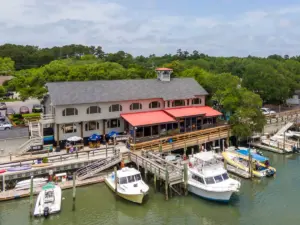
The MarshWalk area and the channels near the inlet mouth see real boat traffic, especially on summer weekends — fishing boats, tour boats, and personal watercraft. Kayaks sit low in the water and can be hard for larger boats to spot. Stick to the marked, sheltered marsh creeks when you’re inexperienced, wear bright clothing, and give wider channels a wide berth.
Weather
Coastal South Carolina gets frequent afternoon thunderstorms in summer, and conditions can shift with little warning. Check the marine forecast, not just the tide chart, before heading out — and get off the water at the first sign of lightning or a fast-approaching storm line.
Frequently asked questions
Are there sharks in Murrells Inlet?
Sharks are present in the broader coastal waters off South Carolina, as they are along most of the Atlantic coast, but shark encounters with kayakers in the inland marsh creeks of Murrells Inlet are not a common concern — most of what you’ll paddle is shallow, protected estuary rather than open ocean.
Is it safe to kayak Murrells Inlet alone?
It’s safer with a buddy, as with any paddling. If you do go solo, stick to well-traveled, sheltered creeks near a launch point, tell someone your route and return time, and avoid the inlet mouth.
What time of year has the safest conditions?
Late spring through early fall generally offers the warmest water and most predictable weather, though summer afternoons bring a higher chance of thunderstorms. See Best Time of Day to Kayak Murrells Inlet for a fuller breakdown.
Do I need a life jacket?
Yes. All local rental operators provide one and require it be worn, and it’s the single most effective safety item for a capsize or unexpected fall-in.
What should I do if I see an alligator while paddling?
Keep your distance, don’t feed it, and continue paddling away calmly. Alligators generally avoid kayaks and people; the goal is simply not to provoke a defensive reaction by cornering or approaching one.
Is the water clean enough to swim in if I fall out?
Murrells Inlet is a working tidal estuary with marsh mud and boat traffic — it’s not a swimming beach. If you capsize, the priority is getting back into the kayak or to the nearest solid launch point, not swimming for recreation.