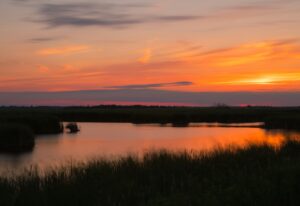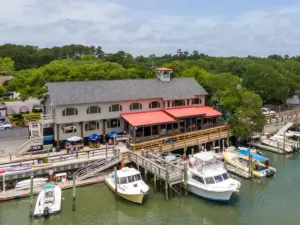
Huntington Beach State Park sits just south of Murrells Inlet in Georgetown County and offers some of the best salt-marsh paddling in the area — 2,500 acres of protected coastal habitat with calm creeks, abundant birdlife, and the historic Atalaya Castle as a landmark along the way.
Key takeaways
- The park covers 2,500 acres, leased to South Carolina for state park use in 1960.
- Atalaya, the Moorish-style residence visible from parts of the park, was built during the Great Depression as the winter home of sculptor Anna Hyatt Huntington and her husband Archer Huntington — the same couple who founded neighboring Brookgreen Gardens.
- Expect strong birdwatching: wading birds, ducks, and other coastal species are regularly seen in the park’s marsh and lagoon habitats.
- Alligators are present in the park’s freshwater and brackish areas — keep a respectful distance, as with any marsh paddle.
- Best paddled on a rising tide for consistent water depth through the marsh creeks.
What makes this route worth it
Unlike a straightforward marsh-creek paddle, Huntington Beach State Park combines wildlife-rich water with a genuine piece of local history. Atalaya — the Huntingtons’ winter residence, built by local labor during the Depression and designed to withstand hurricanes — is visible from parts of the park and adds a landmark most other Murrells Inlet-area routes don’t have. The park was formally leased to the state in 1960 and has remained a protected 2,500-acre habitat since.
What to expect on the water
The park’s marsh and lagoon systems are calm, sheltered paddling — well suited to birdwatching at a slow pace rather than a fast point-to-point route. Expect to see wading birds, ducks, and other coastal species working the shallows, particularly in early morning. As with any Murrells Inlet-area marsh paddle, alligators can be present in the park’s brackish and freshwater habitats; keep your distance and don’t feed wildlife.
Best time to go
A rising tide gives the most consistent water depth through the park’s marsh creeks — check the current tide chart before you launch. Early morning tends to have the most active birdlife and the coolest temperatures, especially in summer.
Pairing it with a land visit
Because Huntington Beach State Park is also a well-known destination on foot — the beach, nature trails, and Atalaya itself — many visitors combine a morning paddle with an afternoon walking the grounds. See our Huntington Beach State Park page for the land-based side of a visit, and Things to Do for how it fits into a broader Murrells Inlet trip.
Frequently asked questions
Can I kayak right up to Atalaya Castle?
Atalaya sits inland from the immediate marsh paddling routes; you can see it from parts of the park, but a dedicated water route directly to the building isn’t the typical approach — pair a paddle with a walk to the building itself.
Are alligators a real concern in this park?
They’re present in the park’s freshwater and brackish habitats, and sightings do happen, but attacks are rare and alligators generally avoid people. Keep a respectful distance and don’t feed wildlife.
Do I need a park entry fee to launch a kayak here?
State park entry fees typically apply to the park itself; confirm current fee and launch-access policy directly with Huntington Beach State Park before your trip, since park fee structures can change.
What’s the best season to paddle this route?
Spring through fall generally offers the most active birdlife and comfortable water temperatures; check current park conditions before a winter visit.
Is this route good for beginners?
Yes, in the sheltered marsh and lagoon areas — treat it the same as any other Murrells Inlet marsh paddle and time your trip around the tide.